
A robot can pass its maker’s test and still fail in a hospital, warehouse, road, or public space. Independent audits give buyers a separate check on safety, security, control limits, and the evidence behind the machine’s claims.
This matters most when a failure can injure someone, damage property, or stop an important service.
Quick read
- Separate review: The auditor should have no role in building or selling the robot.
- Test the real task: A safe lab demo does not prove safe work around people.
- Keep the record: Buyers need test results, limits, faults, and repair steps before signing.
Why the maker’s test is not enough
A maker knows the robot’s design better than anyone else. That knowledge helps during development, but it can also narrow the test plan around expected use, clean floors, trained staff, and controlled conditions.
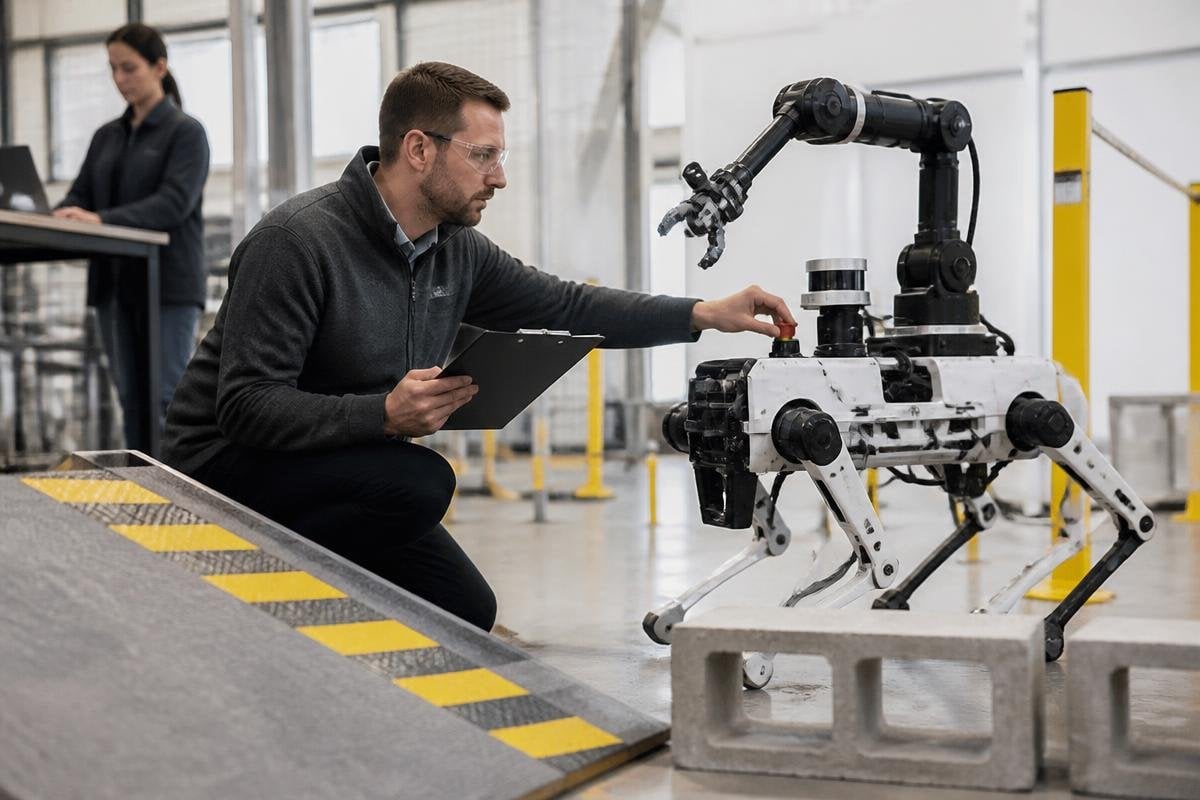
An independent auditor starts with a different question: what could go wrong when the robot meets the site where it will work? That review can include loss of network connection, sensor dirt, blocked paths, a confused operator, damaged cables, or a person entering the robot’s work area.
The point is not to question every engineering choice. It is to check whether the machine behaves safely when the assumptions behind its design stop holding.
What an audit should test
A useful audit needs a written task, a fixed test setup, and clear pass and fail rules. The auditor should record the robot’s speed, stopping distance, load, work area, software version, and control mode during each test.
The review should cover four linked areas:
- Physical safety: Check contact force, moving parts, emergency stops, guarding, and safe restart after a fault.
- Control limits: Test what happens when sensors lose data, commands arrive late, or the robot reaches the edge of its allowed movement.
- Cybersecurity: Review access controls, software updates, logs, remote commands, and the path used to change robot settings.
- Work instructions: Check whether staff can understand the warnings, stop the system, report a fault, and return the robot to service safely.
These checks matter because a fault rarely stays inside one category. A software error can send an arm toward a person. A damaged sensor can change the robot’s path. A poor warning can leave a trained operator unsure what to do next.
Independence needs rules
Calling a review “independent” does not make it independent. The buyer should ask who pays the auditor, who can change the report, and whether the auditor has a financial link to the maker, installer, or maintenance firm.
The final report should name the robot model, software version, test conditions, failed tests, fixes, and limits that remain. It should also state what the auditor did not test. A clean report with missing test boundaries tells the buyer very little.
For an industry buyer checking a new high-risk robot, reports at Robot24.com can put named machines, test dates, and deployment details beside the audit record. That gives the buyer a way to compare the rule with the robot’s stated use before a hardware or software change sends it back for review.
An audit should also expire when the machine changes. A new gripper, navigation system, remote-control feature, or software release can alter the risk. The buyer needs a process that sends the robot back for review after changes that affect movement, sensing, power, or human contact.
The cost of skipping the review
An audit adds time and money before deployment. That cost is visible, while the cost of an untested failure may appear later as downtime, injury, a damaged product, or a forced recall.
The strongest objection is practical: small suppliers may struggle to pay for a full review. A tiered process can help. Low-risk changes may need a document check, while a robot that lifts loads near people or moves through public areas needs hands-on testing.
Still, the buyer should not accept a weaker review when the machine’s possible harm is high. I’d require an independent audit before a high-risk robot works near people.
A buyer’s audit checklist
Use these questions before purchase or site approval:
- Name the exact robot model and software version under review.
- Ask for the test plan, pass rules, failed tests, and open limits.
- Check that the auditor has no maker, installer, or maintenance contract.
- Confirm tests cover the real floor, load, speed, network, and staffing plan.
- Set a review date after major hardware or software changes.
The next useful step is a signed audit record tied to the machine’s serial number, software version, site, and approved tasks. Without that record, “safe to deploy” remains a claim; with it, the buyer has a decision based on tested limits.